
Define the intended workflow, users, environment, core problem and success criteria.
- Use-case definition
- System assumptions
- Feasibility risks
Medical-device development should start with the right destination. Codexter Labs offers two deliberately different pathways — one for proving an idea quickly, and one for engineering a product toward medical-grade development.
The biggest mistake in early medical device development is treating every prototype as if it were already a regulated product, or treating a serious product as if a quick prototype were enough. We separate the two pathways so the engineering effort matches the objective.
Designed for founders, researchers, innovators and organizations that need to demonstrate technical feasibility, test a clinical or operational workflow, attract investment, or establish what should be built next.
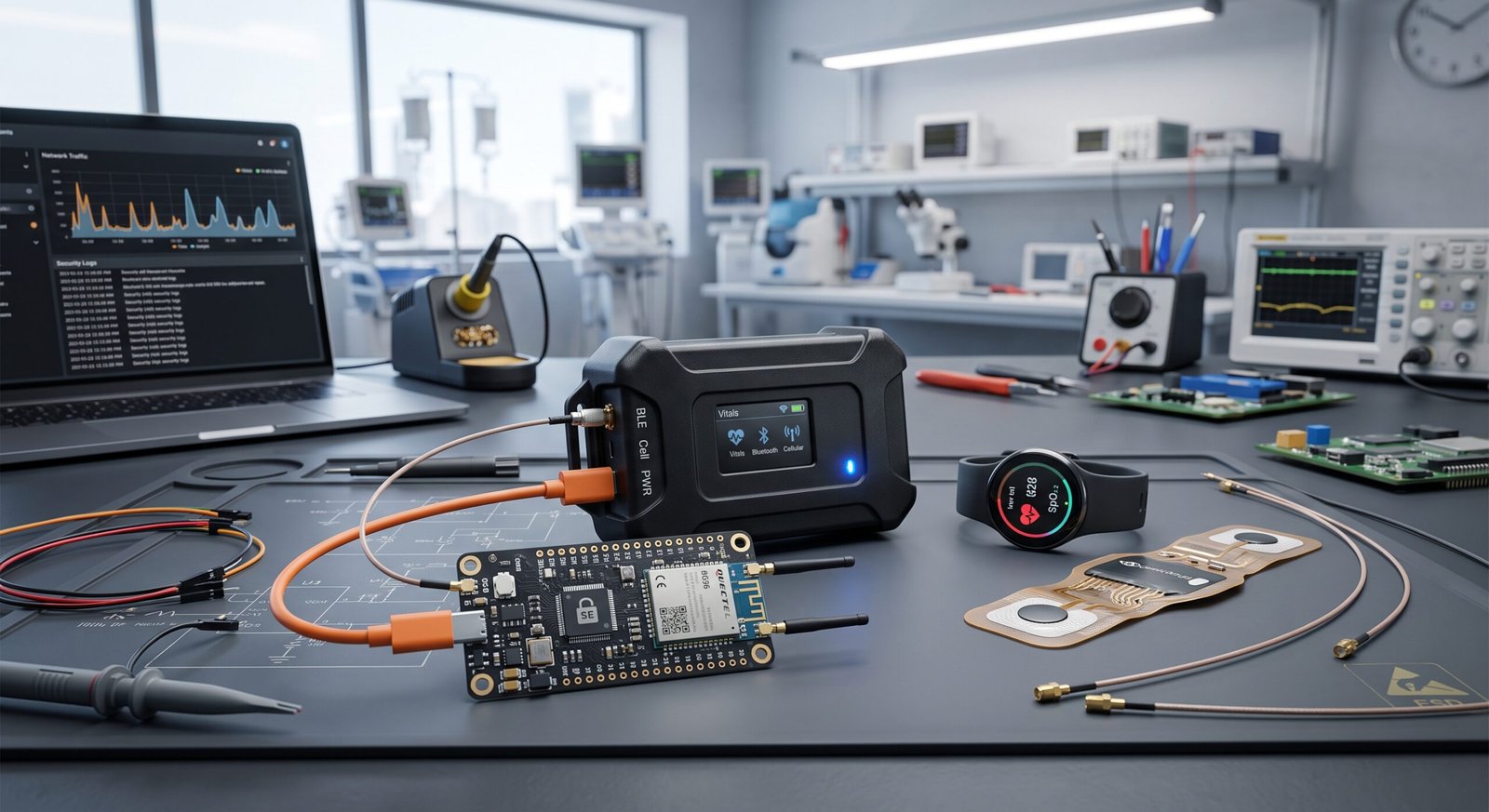
We compress the uncertainty before expanding the engineering. The objective is to answer the highest-risk technical questions early, build the minimum system needed to demonstrate the concept, and document what is required for the next stage.
Define the intended workflow, users, environment, core problem and success criteria.
Translate the idea into a practical hardware, firmware, software, sensor and connectivity architecture.
Develop the minimum hardware/software combination needed to prove the key technical assumptions.
Run structured functional tests against agreed proof-of-concept criteria and capture limitations.
Turn prototype learning into a clear productization roadmap.
Deliverables are shaped around proving the concept rather than prematurely creating a full regulated development package.
Defined use case, functional requirements, system assumptions and development objectives.
Hardware/software architecture, component selection and integration approach.
Working proof-of-concept covering the agreed critical functions and workflow.
Test scenarios, observations, known limitations and technical findings.
Relevant source code, configuration information, architecture documentation and build notes.
Recommended next-stage engineering, regulatory considerations, risks and development priorities.
Indicative timelines for a focused proof-of-concept. Complex sensing, custom electronics, mechanical development or specialized algorithms can extend the schedule.
Use case, requirements, feasibility analysis and technical architecture.
Core hardware/software development and integration.
Functional testing, issue resolution and demonstration preparation.
Documentation, findings and medical-grade productization plan.
Designed for organizations that are moving beyond demonstration and need a structured engineering program for a product intended for medical-device development, verification, quality and regulatory progression.
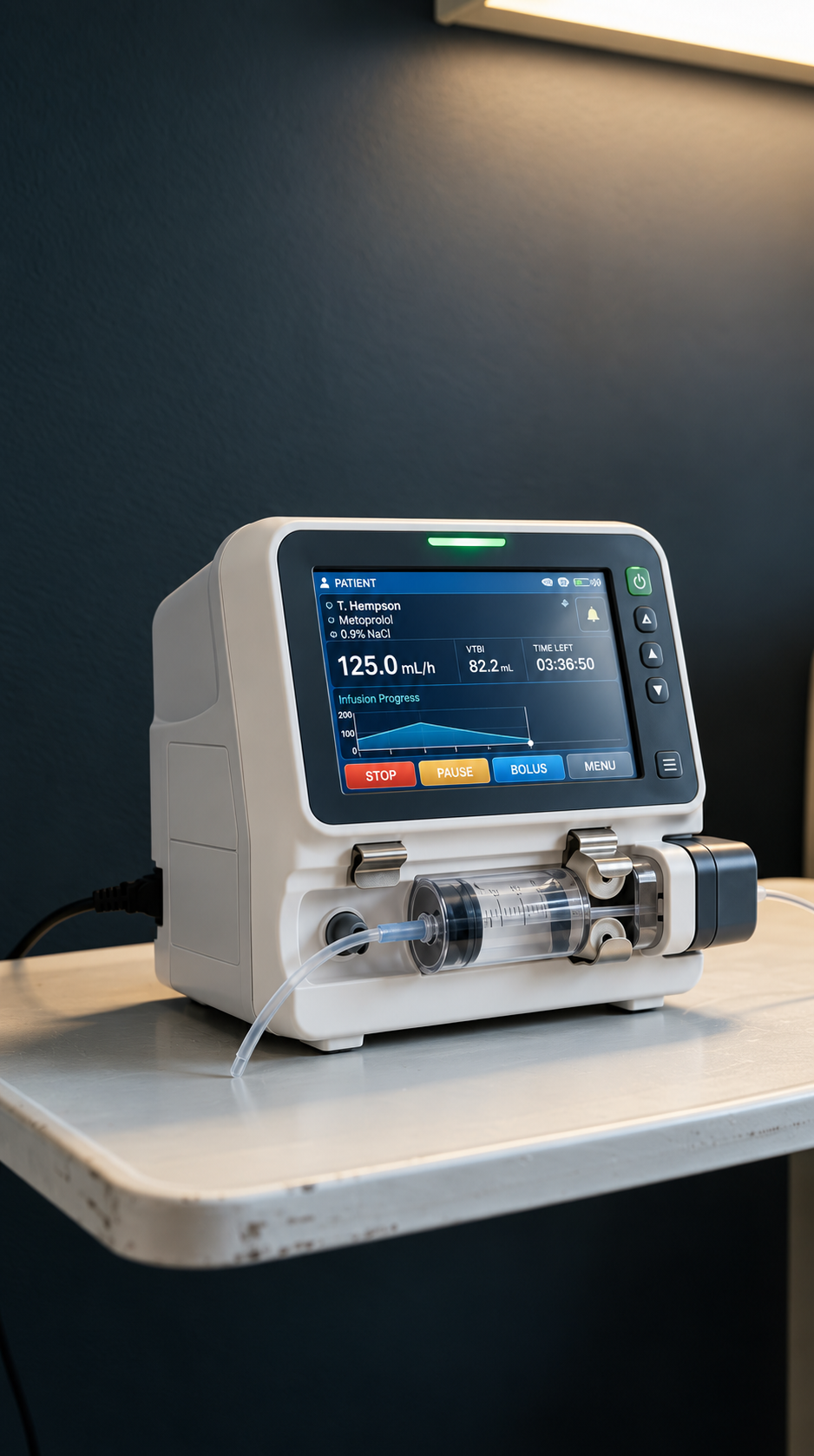
Medical-grade development starts with product definition and risk-aware architecture, then carries requirements, design decisions, implementation, verification and traceability through the development lifecycle.
Establish the product purpose, users, operating environment, interfaces and development objectives.
Design the complete product architecture across electronics, embedded software, application software, connectivity and data.
Implement hardware, firmware and software using a controlled development process with documented requirements and design decisions.
Build a structured verification approach around requirements, interfaces, functions and system behavior.
Move from engineering prototype toward a maintainable, documented and production-oriented product baseline.
A medical-grade product is not simply a more polished prototype. The engineering program must connect product requirements, risk, hardware, software, verification, security and documentation.
Defined use case, functional requirements, system assumptions and development objectives.
Hardware/software architecture, component selection and integration approach.
Working proof-of-concept covering the agreed critical functions and workflow.
Test scenarios, observations, known limitations and technical findings.
Relevant source code, configuration information, architecture documentation and build notes.
Recommended next-stage engineering, regulatory considerations, risks and development priorities.
The exact documentation set is tailored to the product, development stage and regulatory strategy. Typical engineering outputs include:
Structured product and system requirements connected to intended functions and operating conditions.
Hardware, embedded, software, communication and data architecture with defined interfaces.
Electronics/embedded/software implementation, integration and controlled technical releases.
Engineering inputs that support risk-aware design decisions and the broader quality/regulatory process.
Test plans, protocols, results, defect records and supporting evidence appropriate to the development stage.
Release documentation, traceability inputs, technical files/supporting artifacts and roadmap toward the next stage.
| Consideration | MVP / Proof of Concept | Medical-Grade Product Development | ||
|---|---|---|---|---|
|
Primary Objective |
Prove technical feasibility and demonstrate the concept. |
Develop a structured product baseline suitable for progression through medical-device development. |
||
|
Best for |
Early-stage ideas, research concepts, investor demonstrations and technical validation. |
Products moving toward formal productization, verification, quality and regulatory activities. |
||
|
Engineering depth |
Focused on the highest-risk functions and minimum viable architecture. |
System-level engineering across requirements, architecture, implementation, verification and lifecycle. |
||
|
Documentation |
Practical prototype documentation and findings. |
Structured engineering documentation and traceability appropriate to the development stage. |
||
|
Typical duration |
Approximately 6–10 weeks for a focused scope. |
Approximately 4–6+ months for a focused product program; complex products can require substantially longer. |
||
|
Regulatory Posture |
Regulatory considerations inform the roadmap; prototype is not assumed to be submission-ready. |
Regulatory and quality considerations are incorporated into the engineering lifecycle from the beginning. |
||
Where applicable, our engineering programs can be aligned with the broader requirements and standards landscape relevant to the product and target market, including US FDA, EU MDR/CE and SFDA considerations, as well as ISO 13485, ISO 27001, IEC 62304 and IEC 60601-related engineering contexts.
US FDA
EU MDR / CE
SFDA
ISO 14971
ISO 13485
ISO 27001
IEC 62304
IEC 60601
SaMD
SiMD
Tell us what you are building, where the concept stands today and what you need to achieve next. We can help map the appropriate development pathway, technical scope and engineering milestones.


